

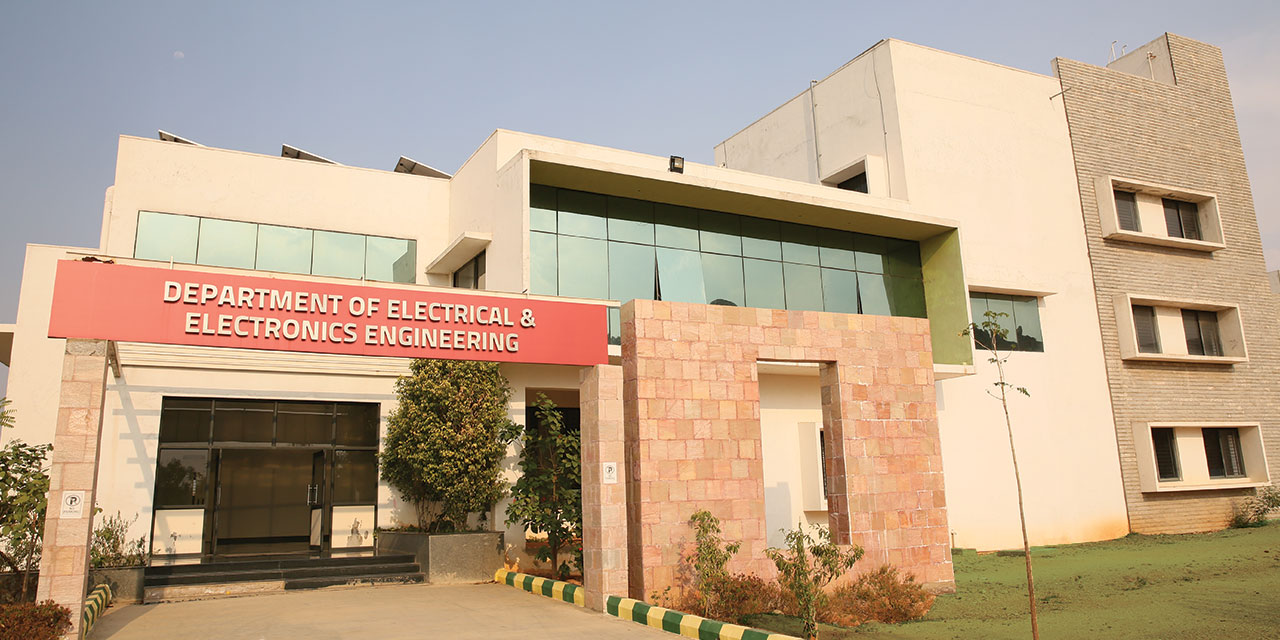






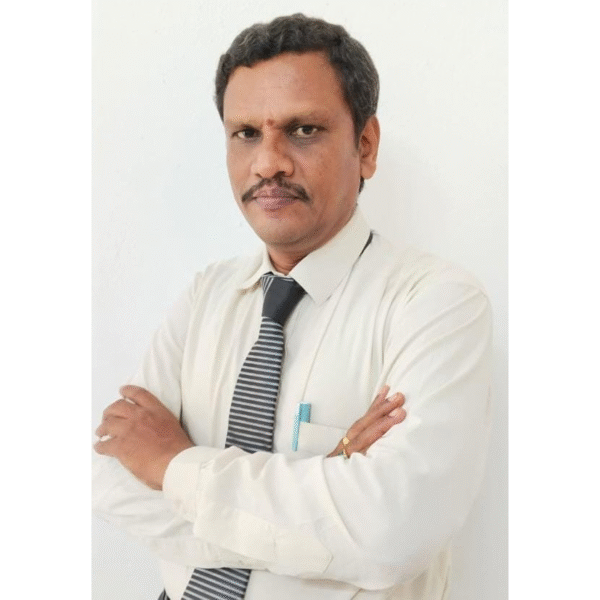
Dr. K.NARASIMHAIAH ACHARI
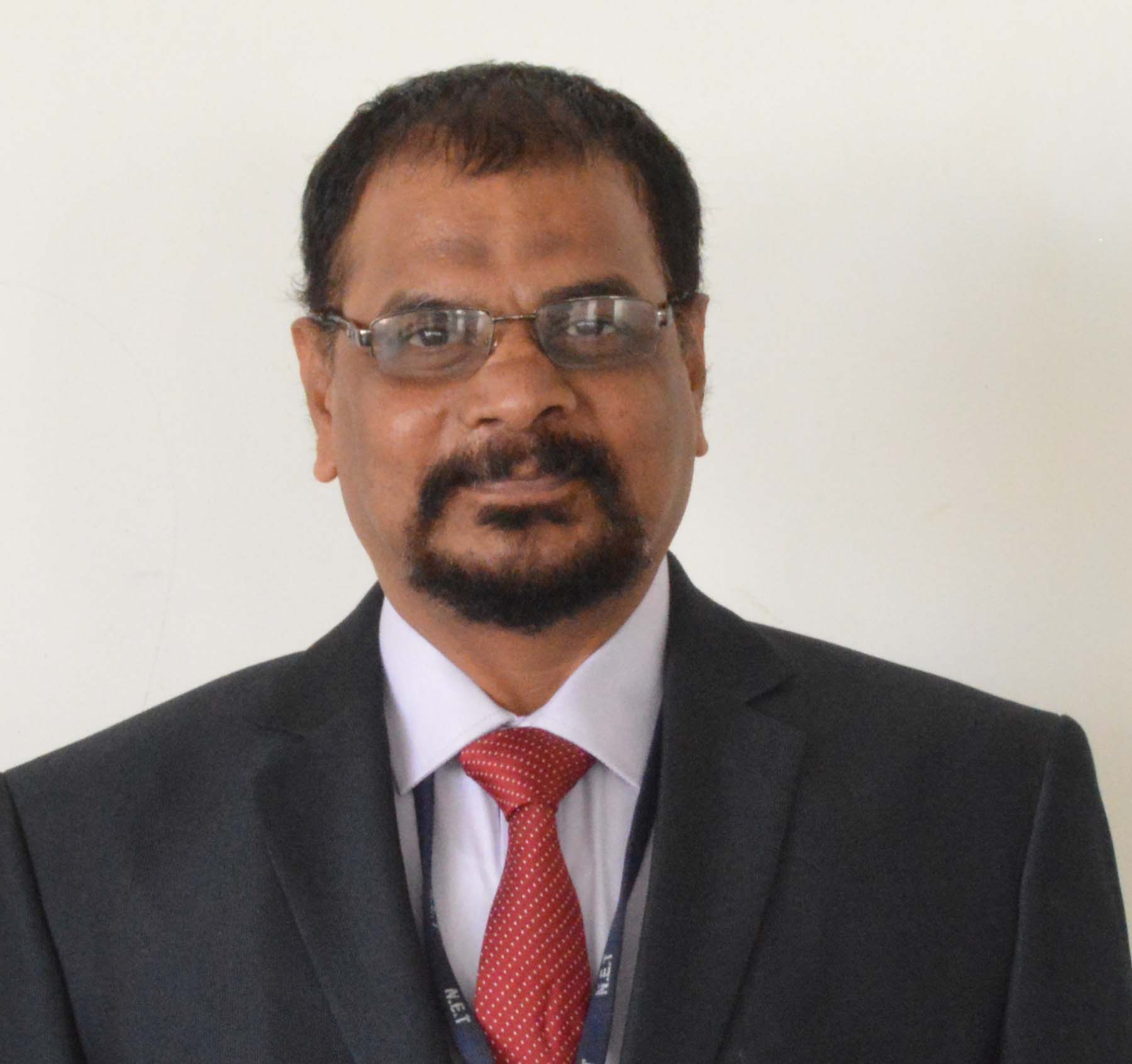
Dr. B.K. MAZUMDAR

Dr. C.V.V PAVANI

Mr. Daniel N

Mrs. Geeta.K.M
B. Madhu Babu
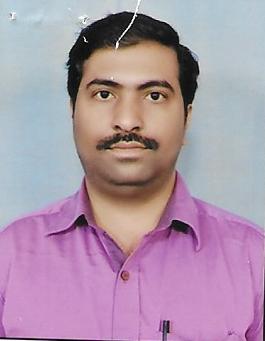
Mr Banda Gururaj
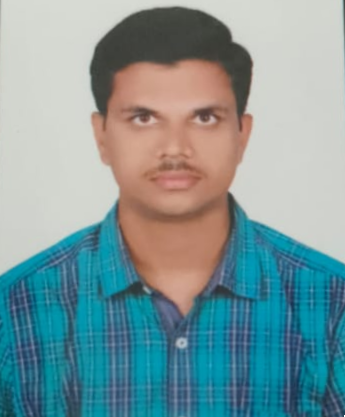
Y.SURESH KUMAR
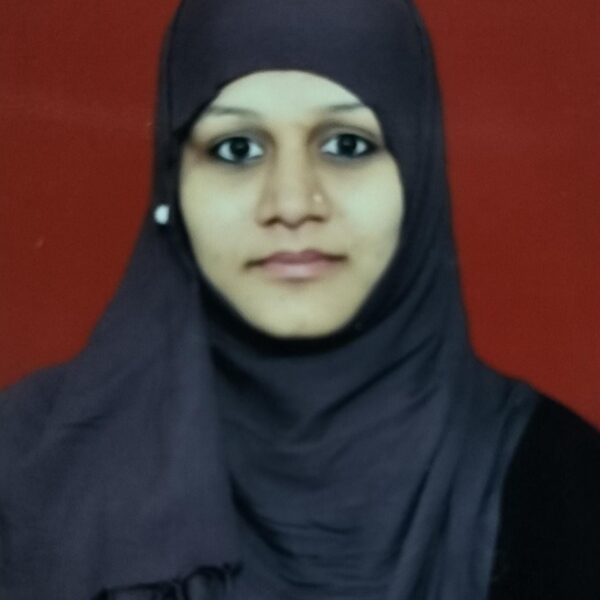
Ruksana Begum
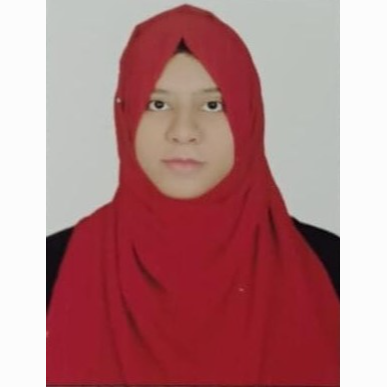
Mrs. Asima Nikhat

D.ASHOK KUMAR
Dr. K.NARASIMHAIAH ACHARI
Professor & Head of Department
- Professor & Head,
- Department of Electrical and Electronics Engineering,
- Navodaya Institute of Technology, Raichur, Karnataka.
EDUCATIONAL BACKGROUND
Graduation
- Received B.Tech. degree (Department of Electrical and Electronics) in the year 2000, form Department of Electrical and Electronics Engineering, from Andhra University, Visakhapatnam, Andhra Pradesh State.
Post Graduation
- Received M.Tech. degree in the year 2008 with the specialization of Power Electronics, from Department of Electrical and Electronics Engineering, Jawaharlal Nehru Technological University, Hyderabad.
Doctor of Philosophy
- Awarded Ph.D. degree in the year 2019 with the thesis title of “Performance Improvement of Sensor less Controlled IPMSM Drive with Adaptive Controllers”, from Department of Electrical and Electronics Engineering, Jawaharlal Nehru Technological University Anantapur, Anantapuramu, Andhra Pradesh State.
WORK EXPERIENCE
- A total of 18+ years teaching, administration and research experience so far in various institutions:
- Vasavi Polytechnic, Banaganapalli, Kurnool(Dt.), Andhra Pradesh State (From 24/04/2001 to 25/09/2004 – Total 3 years 5 months)
- Worked as an Associate Lecturer from April, 2001 to Sep, 2004. During this period the following rolls were played.
- For More Details Click on below link
- RESUME - DR K N ACHARI
Phone
Location
Dr. B.K. MAZUMDAR
Associate Professor
- Pursing (Ph.D.) in Electrical Engg. Mewar University, Rajasthan Mewar University, Rajasthan
- M.Tech. in Heavy Electrical Equipment's
- MANIT, Bhopal in the year 2007
- B.E in Electrical Engg. GNDEC, Bidar. in the year 1989
EXPERIENCE:
- Working as Assistant Professor at Navodaya Institute of Technology from 2013 to till date
- Assoc. Professor at BITS Bhopal from 2012 to 2013
- Assistant Professor at Navodaya Institute of Technology from 2008 to 2012
- Senior Lecturer at GNDEC, Bidar from April 2007 to June 2008
- Senior Lecturer at BITS Bhopal from 2003-2008
- Lecturer at GNDEC, Bidar from 2002-2003
- Lecturer at GNDP, Bidar from 1990-2002
SEMINARS/ WORKSHOPS:
- Organized FDP in the year 2014-2015
- Attended Workshop MATPERDIP 2007-08
- Attended Inter National Workshop on GLOGIFT 2005-06
- Attended Workshop GURUVEDA 2002-03
Memberships of Professional Bodies
- IETE
- ISTE
Dr. C.V.V PAVANI
Associate Professor
EDUCATION:
- Doctor of Philosophy in power systems, Department of Electrical & Electronics Engineering, Sunrise University, Alwar, Rajasthan.
- E in Power Electronics & Industrial Drives, Department of Electrical & Electronics Engineering Sathyabama University, Chennai. GOLD MEDALIST at University level.
- B.A in Human Resource Management, Dr. B R Ambedkar Open University, Hyderabad
- Tech in Electrical & Electronics Engineering, Department of Electrical & Electronics Engineering Narasaraopeta Engineering College, Narasaraopeta ;Affiliated to JNTU, Hyderabad
EXPERIENCE:
- Currently working as an Assistant Professor in Department of Electrical & Electronics Engineering Navodaya Institute of Technology Raichur-584103, Karnataka
- Assistant Professor Department of Electrical & Electronics Engineering Dilla University, Ethiopia Associate Professor Department of Electrical & Electronics Engineering Krishna Murthy College of Technology and Engineering Ghatkesar, Hyderabad, Telanga
- Vice Principal & Associate Professor Department of Electrical & Electronics Engineering Vishwa Bharathi college of Engineering & Technology, Hyderguda, Hyderabad, Telangan
- Senior Assistant Professor Department of Electrical & Electronics Engineering Narayana College of Engineering, Gudur, Andhra Pradesh.
- Assistant professor Department of Electrical & Electronics Engineering St. Ann’s College of Engineering & Technology, Chirala, Andhra Prades
PUBLICATION (s):
- Mrs. C V V Pavani, K Jyothi, Rajasekhar “ FACTS using Fuzzy logic controller” at International Conference 2007, JNTU Anantapur
- Mrs. C V V Pavani, K Jyothi, Rajasekhar “Reduction of Sub Synchronous Resonance in Wind Farming using FACTS controllers” at TEQIP sponsored National Conference 2008, JNTU, Anantapur.
- Mrs. C V V Pavani, K Jyothi, Rajasekhar “Analysis- Optimization and a New Design Method for High Power, High- Efficiency Switched Capacitor DC-DC Converters” at National Conference 2009, JNTU, Kakinada.
- Mrs. C V V Pavani, D Narrisetti Srinivas “Emerging Trends in Science and Technology with respect to Power quality” in international Journal IIJAR vol 3, 2015
- D C V V Pavani, Mrs. P. Sreelatha“ Improvement of Grid Power Quality using Fuzzy Logic” in national conference “CRETTMASALA-2016” on july 2nd & 3rd 2016
- D C V V Pavani, Dr. Gurvinder Kour“ Improvement of power Quality in Micro Grids Using different Control Strategies” in international conference “CRETMASALA-2015” on DEC 18th & 19th 2015.
- D C V V Pavani, Dr. Gurvinder Kour “Emerging Trends in Science and Technology with respect to voltage quality” in international Journal IIJAR vol 7, 2017
- D C V V Pavani“Power Quality Improvement by SRF based control using dynamic voltage restorer (DVR)” in International Journal IJEET vol 9, Issue 1, 2018
SEMINARS/ WORKSHOPS/CONFERENCES:
- Mrs. C V V Pavani, One week Workshop on “High Impact Teaching skills” conducted by WIPRO as part of Mission 10X program at Krishna Murthy Institute of Technology and Engineering, 5th – 9th Mar, 2012
- Mrs. C V V Pavani, Two Days Staff Work Shop on “Neural Networks & Fuzzy Logic Applications”, on 23rd - 24th Dec, 2011 at VITS, Hydera
- Mrs. C V V Pavani, Two day National Seminar on “Non-Conventional Energy Sources”, 12th and 13th March, 2010 at VNR VJIET, Hyderaba
- D C V V Pavani, Two Months Workshop on Theoretical and Practical exposure of “ Solar PV system” Conducted by DonBosco TVET School at DonBosco, Dilla from 14 Feb 2022-14 April 2022.
- D C V V Pavani, One day Summit on “5G Wireless technology and Solar PV system” 5th Nov ,2022, Conducted by 2nd IEEE Young Professionals Future leaders’ Summit 2022, Malaysia.
Mr. Daniel N
Assistant Professor
- Registered Ph.D. in Image processing VTU University Belagavi
- M.E in Power Electronics at PDACE Kalburgi, VTU University in the year 2010
- B.Tech in Electronics and Communication Engineering in the year 2004
EXPERIENCE:
- Assistant Professor at Navodaya Institute of Technology from 2010 to till Date
- Lecturer at GCE College Raichur from 2006-2008
- Lecturer at GPT College Raichur from 2005-2006
PUBLICATION (s):
- A Novel AI therapy for depression counselling using Face Emotion Techniques.
SEMINARS/ WORKSHOPS:
- Orientation Programme on “AI & ML Revolution”
- Conference attended in the year 2010-2011
- Workshop on Micro-controller in the year 2011-2012
- FDP in Sona College of Technology, Salem in the year 2013-2014
- FDP at NIT Raichur in the year 2014-15
- Seminar on Advanced Technology in RTPS in the year 2015-16
- FDP on Digital Image Processing in the year 2015-16
- FDP on Xilinx in the year 2015-16
- FDP on MATLAB and its applications to Engineering Problems in the year 2016-17
- FDP on LATEX in the year 2016-17
- FDP on Teaching and Pedagogical Skills in the year 2016-17
Memberships of Professional Bodies:
- ISTE
Mrs. Geeta.K.M
Assistant Professor
- M.Tech in Power Electronics, PDA college Kalaburgi VTU University, Balagavi in the year 2012
- BE in Electrical and Electronics Engineering at GNDEC, Bidar under VTU University in the year 2009
EXPERIENCE:
- Assistant Professor at Navodaya Institute of Technology from 2011 to till date
PUBLICATIONS:
- “STANDARDIZATION OF RENEWABLE ENERGY SOURCES FOR A MICROGRID” International Journal of Electrical and Electronics Engineering.Volume 14,issue No.01,Jan-June 2022.
- A Three-Phase Current Fed Push-Pull Converter on RTEE-12 in the year 2012
SEMINARS/ WORKSHOPS/CONFERENCES:
- K.M Mahadevi Biradar “A THREE-PHASE CURRENT-FED PUSH-PULL DC-DC CONVERTER” for of National Conference on Recent Trends in Electrical Engineering (RTEE-12).
- Webinar on “Artificial Intelligence and Robotics" on 30-06-2021.
- FDP on “Recent Innovative Developments in Thermal Engineering" From 28-06-2021 to 03-07-2021.
- FDP on “Recent Advancements in Electrical Engineering" from 26-07-2021 to 30-07-202.
- Nation Level FDP on ‘E-Resources For Academic Excellence’ At Guru Nanak Dev Engineering College, Bidar From 8th To 13th July 2019.
- Five days FDP on “IoT and Its Applications” Organized By GNDEC, Bidar.
B. Madhu Babu
Assistant Professor
- Pursuing ph.D in K.L University :2015
- Studied M.Tech in Samskruti College of Engineering & Technology from JNTU-HYD WITH 76.3% in 2013.
- Studied B.E in Ellanki College of Engineering & Technology from JNTU-HYD WITH 64.13% IN 2011.
EXPERIENCE:Worked as Assistant professor in Brindavan Institute of Technology and Science for 7 months. Worked as Assistant professor in VV Institute of Technology(VVIT) and Science for 2 years
Mr Banda Gururaj
Assistant Professor
- Ph.D.: Electrical Engineering, G. Pulla Reddy Engineering College (R&D) Centre, Kurnool, JNT University Anantapur, Registered on 30", June 2017, (pursuing).
- M. Tech:Power Electronics, G. Pulla Reddy Engineering College, (Autonomous), Sri Krishna Devaraya University, Anantapur, 7.889 CGPA September, 2011.
- B. Tech:Electrical & Electronics Engineering, Annamacharya Institute of Technology and Sciences,Rajampet, J.N.T. University Hyderabad, 72.75%, May, 2008.
- Diploma:Electrical & Electronics Engineering, E.S.C. Govt., Polytechnic, Nandyal, State Board of Technical Education & Training, Hyderabad, 75.91%, April, 2005
Teaching Experience: 8 years
Y.SURESH KUMAR
Asst Professor
- Master of Technology (Power Electronics) from Daripally college of Engineering, affiliated to JNTU, Hyderabad, with a aggregate of 75% during 2012-2014.
- Bachelor of Technology (Electrical & Electronics Engineering) from Swarna bharathi college of engineering,khammam affiliated to JNTU, Hyderabad with a aggregate of55% during 2007-2011
- Intermediate passed from Triveni Junior College ,from suryapet under Andhra Pradesh Board of Intermediate Education with marks of 00% in 2007
- Secondary school certificate passed fromxavier’s high school, Suryapet, Andhra Pradesh Board of secondary Education with marks of 69% in 2005.
EXPERIENCE:
- Worked as a Sub-Engineer for General Maintenance works at 400 kv Sub-Station Mamidipally.Hyderabad from 2011 to
- Worked as Asst Professor in EEE Dept in Medha Institute Of Science and Technology For Women, Khammam, from March 2015 to November 2016.
- Worked as Asst. Professor in EEE Dept. in Swarna Bharathi Institute of Science & Technology, khammam, from December 2016 to April 2018
SOFTWARE KNOWLEDGE:
- Microsoft windows XP/windows7/8/10
- Microsoft office(word/excel/power point)
STRENGTHS:
- Highly motivated ability to work amicably with colleagues.
- Confidence and strong belief in completing the assigned work successfully
Ruksana Begum
Assistant Professor
- M-Tech [Pursuing](Power Electronics)(2020-2022)PDA College of Engineering and Technology –Gulbarga. -8.33- CGPA - Gulbarga, Karnataka, India.
- B.E( Electrical and Electronics Commutation) (2014-2018) Navodaya Institute of Technology - 70% , - Raichur , Karnataka, India.
- PUC Science (2013- 2014) Vidya Bharati PU College - 76% - Raichur , Karnataka, India.
- SSLC , DAV Public School
Certificates:
- Simulation Tools and Research Applications
- Simulation Tools For Electrical Engineering and its real time Applications
- Advanced driven setup with WAVECT Controlee : A RCP System
- Design and development of ELECTRIC VEHICLE
- Power Electronic System and its real time applications
- Mathematical modelling and Controlee design for Non-linear application
- Deign of PFC with Buck-Boost Converter for Plug-in Electric Vehicles and Batterycharging applications
Curriculum Activities:
- Participated in International Conference in 1EEE [ Advancing Technology forHumanity],
- The GOKARAJU RANGARAJU Institute of Engineering and Technology in Hyderabad,Telangana, India.
Projects Undertaken:
- Name of the Project: Automatic fault Protection by using SMPS System
- Project Concept: GPRS with fault detection
- Operating System: Windows 10, MATLAB- Simulates
- Team Size: 4
- Period: December 2017- February 2018
Mrs. Asima Nikhat
ASSISTANT PROFFESSOR
- M Tech in Power Electronics at Pooja doddapa appa college of Engineering Kalaburgi in 2024.
- BE in Electrical and Electronics Navodaya Institute of Technology, Raichur under VTU Belgaum in 2019
EXPERIENCE:
- Assistant Professor at Navodaya Institute of Technology from October 2024 to till date.
SEMINARS/ WORKSHOPS:
- Design and Simulation of closed loop DC/DC synchronous sepic converter by using PID controller 2023-2024
- Sensors and actuators 2021-2022
PUBLICATION
- The outcome of dissertation work is presented and certified in the form of article titled “Design of Synchronous SEPIC Converter With Voltage Control Strategy” in STRAD RESEARCH,VOLUME 11,ISSUE 2,FEBRAUARY -2024.
- The outcome of the dissertation work is presented and certified in the form of artcle titled “DESIGN and Simulation of Closed Loop DC-DC synchronous SEPIC Converter using PID Controller” in GRADIVA REVIEW JOURNAL VOLUME 7,ISSUE 9,SEPTERBER 2021.
- The outcome of the dissertation work is presented and certified in the form of article titled “Design of Synchronous SEPIC Converter with Voltage Control Strategy.JOURNAL OF XIDIAN UNIVERSITY VOLUME 18,ISSUE4,2024
D.ASHOK KUMAR
Assistant Professor
- Master of Technology (Electrical Power Systems) from Chaitanya Bharathi Institute of Technology , affiliated to JNTU, Ananthapuramu, with an aggregate of 75.50% during 2013-2015.
- Bachelor of Technology (Electrical & Electronics Engineering) from Vaagdevi Institute of Technology and Sciences, Proddatur affiliated to JNTU, Ananthapuramu with a aggregate of 60.29% during 2006-2010.
- Intermediate passed from Sree Veerabadra Junior College ,from Proddatur under Andhra Pradesh Board of Intermediate Education with marks of 877 in 2006.
- Secondary school certificate passed from Sri Vasistha high school, Proddatur, Andhra Pradesh Board of secondary Education with marks of 80% in 2004.
EXPERIENCE:
- Worked as Asst Professor in EEE Dept in Sri Venkateswara College of Engineering and Technology , Chittoor, from June 2011 to April 2013 (02 years with B-Tech Qualification).
- Worked as Asst. Professor in EEE Dept. in VEMU Engineering College, Pakala, from November 2015 to October 2017 (02 years).
- Worked as Asst. Professor in EEE Dept.in Vaagdevi Institute of Technology and Sciences, Proddatur, from May 2018 to November 2018 (06 Months).
- Worked as Asst. Professor in EEE Dept.in Anantha Lakshmi Institute of Technology and Sciences, Ananthapur, from November 2023 to May 2025(1 Year & months).
RESERACH PUBLICATIONS:
- PERFORMANCE ENHANCEMENT by DEADBEAT CURRENT CONTROL SYSTEM FOR GRID CONNECTED SYSTEM WITH LLCL FILTER, 3, ISSUE 4, ISSN: 2321-7758, IJOER.
STRENGTHS:
- Highly motivated ability to work amicably with colleagues.
- Confidence and strong belief in completing the assigned work successfully
Emailashok.nit@navodaya.edu.in